
Key takeaways
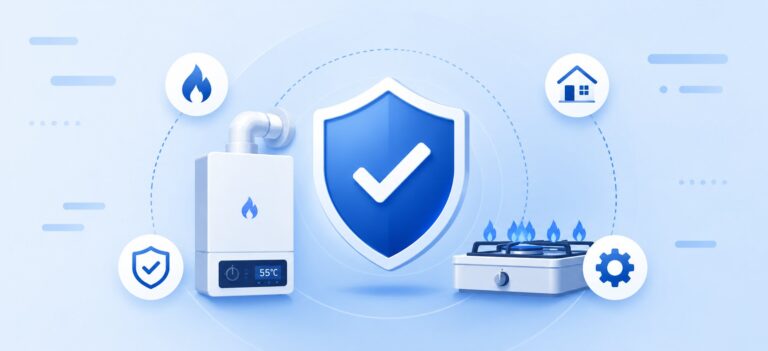
- Gas safety compliance (UK) is the legal duty to keep landlord-provided gas appliances, pipework, and flues safe, checked on schedule, and properly recorded.
- In Great Britain, landlords must arrange a gas safety check at least every 12 months by a Gas Safe registered engineer and keep a Landlord Gas Safety Record.
- Residents must receive the latest record within 28 days, and new tenants must get it before they move in.
- Social landlords need control over scale, access, contractors, and evidence.
What is gas safety compliance?
Gas safety compliance means meeting the legal requirements for gas safety in rented homes, including:
- maintaining gas pipework, appliances, and flues you provide
- completing safety checks on time
- creating, keeping, and sharing the correct records
- using registered engineers for gas work
In Great Britain, these duties sit mainly under Regulation 36 of the Gas Safety (Installation and Use) Regulations 1998, with more practical direction in the HSE’s landlord guidance.
The landlord’s duties that matter day to day
Maintain what you provide
Landlords must ensure gas pipework, appliances, and flues they provide for tenant use are safely maintained. HSE summarises this in its landlord gas safety FAQs.
For social landlords, this starts with clarity: what is installed where, what is communal, and what is landlord-controlled. Regulation 36 also defines “relevant gas fitting” in a way that captures appliances and pipework serving the premises that are owned or controlled by the landlord.
Arrange safety checks at least every 12 months
Regulation 36 requires each relevant appliance and flue to be checked within 12 months of installation and then at intervals of no more than 12 months since the last check.
Checks must be carried out by a registered engineer. HSE explains this in “Gas safety check: who can do it?”, and you can verify registration through the Gas Safe Register.
Record it, retain it, and share it on time
After each check, you must produce a compliant Landlord Gas Safety Record (often called a “gas safety certificate” or CP12). You can read more about the required fields and practical expectations in the gas safety record guidance.
Two deadlines are easy to miss:
- existing tenants: provide the record within 28 days
- new tenants: provide the record before they move in
Digital storage is allowed if records are secure, retrievable, and clearly identify the engineer.
What a gas safety check covers (and what it doesn’t)
A gas safety check is a formal safety check on the appliances and flues that the landlord is responsible for. It is not automatically the same as a full service plan for performance or efficiency.
Another important thing to note is that the record should be issued on completion of checks and then supplemented with follow-up actions where needed, treating it as a “living document”.
Why gas safety compliance matters more in social housing
Social landlords carry the same legal duties as any landlord, but the operational reality is different.
- Scale exposes weak spots. A small percentage of missed appointments becomes a large number of overdue checks and open remedials.
- Access is part of compliance. When residents are hard to reach, you still need consistent steps, escalation routes, and evidence that shows what was attempted and when. You can read more about landlord responsibilities and tenant-related issues in that wider context in the HSE’s landlord guidance.
- Evidence protects teams. When a complaint, audit, or incident is raised, the organisation needs clear answers: what was installed, when was it last checked, what defects were found, and what was done next.
A brief note on carbon monoxide alarms
Gas safety checks and carbon monoxide alarms are not the same thing, but both reduce the same core risk.
Rules vary by nation. For England, see the government’s Smoke and Carbon Monoxide Alarm guidance.
For Wales, the Renting Homes (Fitness for Human Habitation) (Wales) Regulations 2022 set out CO alarm requirements.
A simple compliance checklist
- Asset truth: you can list every landlord-responsible gas appliance and flue by property.
- 12-month cycle: checks are planned to avoid slipping past the legal interval.
- Registered engineers: verified via the Gas Safe Register.
- Records and sharing: records are complete, stored securely, and issued within the required timeframes.
- Remedials tracked: defects and follow-up actions are linked back to the check record.
Most teams know what the rules say. The problem is volume: thousands of homes, multiple contractors, and evidence scattered across inboxes, PDFs, and spreadsheets.
If you want to learn more about how gas safety compliance can be automated, you should check out our Gas Safety Compliance page. There, you can see exactly what a comprehensive compliance system can do.