
Key takeaways
- Where in the UK matters: England, Wales, Scotland and Northern Ireland have different rules for rented homes.
- In England, electrical standards in rented homes are tied to BS 7671 (18th Edition) and enforced through inspection, reporting, and remedial work.
- Social rented homes in England are now in scope through the 2025 extension, with staged commencement dates depending on when the tenancy was granted.
- Responsibility is not a paper exercise: even where contractors do the work, the legal duty sits with the organisation or person with control.
What electrical safety compliance actually covers
In most housing and property portfolios, “electrical safety” spans two areas:
- Fixed electrical installations
Wiring, consumer units, sockets, lighting circuits, and permanently connected equipment such as showers and extractors. - Electrical equipment provided as part of the tenancy or service
What counts and how often it must be checked depends on where you are located, but you should treat landlord-provided equipment as part of the compliance picture, not a side note.
If you manage homes at scale, it’s worth looking into how some technologies can help keep this problem under control. Our page on our Electrical Safety Compliance stream sets out the building blocks and where EICRs fit in all that.
The main rules you need to know for the UK
England: rented homes (private and social)
England’s rented sector approach is set out in the government’s guidance on electrical safety standards in the private and social rented sectors. It anchors “electrical safety standards” to BS 7671 (18th Edition) and requires inspection and testing by a qualified person at least every five years, alongside clear rules on reports, timescales and remedial work.
The underlying law is the Electrical Safety Standards in the Private Rented Sector (England) Regulations 2020.
From 2025, this regime was extended into social housing through the 2025 extension regulations, with transitional arrangements and duties that include checks for electrical equipment provided under the tenancy.
Wales: fitness for human habitation and five-yearly testing
Wales takes a similar but slightly different approach. Under the Renting Homes framework, Welsh Government guidancefor contract-holders states landlords must carry out an electrical safety test at least every five years (periodic inspection and testing) and references the EICR and follow-up work where required.
Scotland: Repairing Standard and five-yearly inspections
Scotland’s approach sits under the Repairing Standard, supported by Scottish Government which sets out a minimum standard of electrical safety inspection at least every five years for relevant tenancies, along with competence expectations.
Northern Ireland: Electrical Safety Standards Regulations (2024)
Northern Ireland now has a defined regime for private tenancies, with official guidance stating private rented properties must have a certified inspection of the hardwired installation by the relevant compliance date, and landlords must complete remedial corrective action where faults are identified. For more infromation check out this Department for Communities article.
Building work in dwellings (England): Part P
Where electrical installation work is carried out in dwellings, England’s Building Regulations are supported by Approved Document P. This is the building control document on electrical safety in homes, and it’s often the reference point for how domestic electrical work should be designed and installed.
Who is responsible?
There isn’t one universal title like the “Responsible Person” in fire safety. For electrical safety, responsibility follows control.
Landlords and registered providers (rented homes)
In England’s regime, duties sit with the landlord. That includes arranging inspection and testing, obtaining the report (usually an EICR), providing it within set timescales, and completing remedial work within the required period. For social landlords, there are additional duties around electrical equipment checks.
In Wales, the landlord must ensure the five-yearly test is carried out and that follow-up work is confirmed in writing where the EICR triggers it.
In Scotland and Northern Ireland, the landlord remains the accountable party for meeting the required standards and acting on defects.
Managing agents and contractors
Agents and contractors can deliver the work, but they don’t remove the duty from the organisation or person who must comply. The compliance risk is not the inspection visit, it’s what happens next: defects, remedials, records, and re-test cycles.
What “compliance” looks like in day-to-day terms
1) Inspection and testing at the right interval
In England, landlords must have installations inspected and tested at least every five years by a qualified person, aligned to BS 7671 standards, with the report setting the next inspection date.
Wales is also explicit on the five-year cycle for periodic inspection and testing.
2) Reporting and sharing the EICR
England’s guidance sets out who must receive the report and when. For example, you might need to provide it to existing tenants within 28 days, new tenants before they move in, and local councils within seven days if requested.
Wales’ guidance includes timelines around providing the EICR and written confirmation of any additional work.
3) Fixing defects within the required timescale
England’s regime requires remedial or further investigative work to be completed within 28 days (or sooner if the report requires it), with written confirmation from the qualified person once completed.
Northern Ireland’s official guidance also points to remedial corrective action where faults are identified.
4) Knowing when the social rented extension applies (England)
England’s government guidance sets out staged commencement for social housing, with different dates depending on when tenancies were granted. That matters for planning programmes, budgets, and tenant comms.
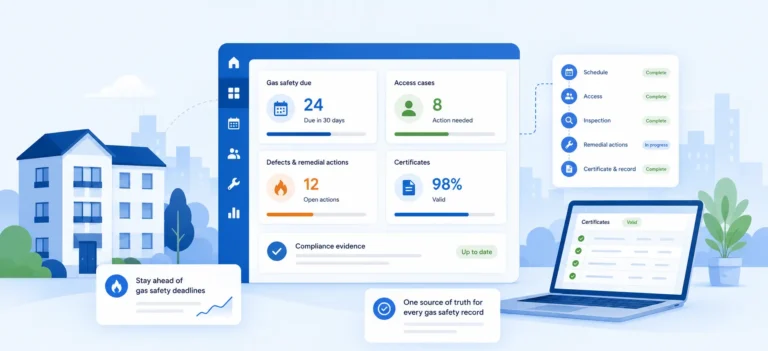
A practical way to stay compliant (without living in spreadsheets)
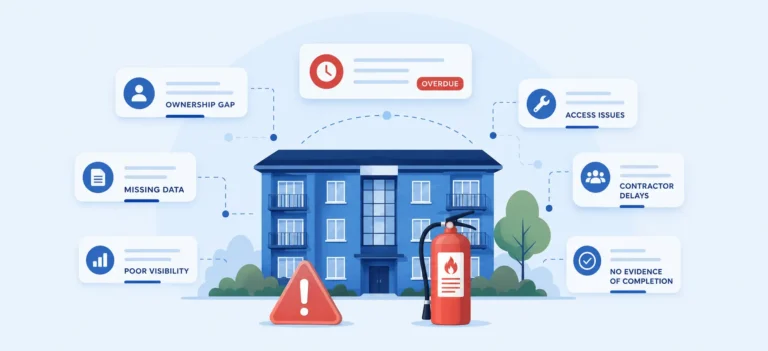
Most compliance failures are process failures: missing documents, unclear responsibility, slow follow-up.
A sensible operational approach looks like this:
- Keep a property-level record of the last EICR date, outcome, and next due date. (England’s guidance explicitly expects retention and handover to the next inspector.)
- Treat “unsatisfactory” as a tracked set of actions with owners, deadlines, and evidence of completion, not a PDF in a folder.
- Use qualified, competent contractors and record why they meet that bar.
- Issue reports to tenants within the required timeframes and keep proof that you did.
If you want more information about how technology can help streamline a lot of these processes and keep you compliant, you can check out our Electrical Safety Compliance page.