This post is about rented housing: landlords, letting agents, housing associations, and local authority landlords.
Key takeaways
- England: fixed electrics must be inspected and tested by a qualified person at least every 5 years, with an EICR (or equivalent report).
- Wales: landlords must have a valid electrical condition report for homes rented on an occupation contract, typically 5 years unless the report sets a shorter date.
- Scotland: landlords must arrange an electrical safety inspection by a registered electrician at least once every 5 years.
- Northern Ireland: inspections are at least every 5 years; new rules apply from 1 April 2025 for new private tenancies, with a deadline of 1 December 2025 for existing tenancies to comply.
- In every nation, the re-inspection date on the report matters. If it says sooner than 5 years, that’s your deadline.
The UK-wide rule of thumb: 5 years, unless told otherwise
Across the UK, rented housing has landed on the same rhythm: periodic inspection and testing of the fixed installation at least every five years.
That doesn’t mean you always get the full five years. Your electrician can set a shorter interval, and you may need earlier checks if there’s a reason to doubt the installation is still safe.
What counts as an “electrical safety inspection”?
Most landlord duties focus on the fixed electrical installation: wiring, sockets, light fittings, consumer unit, and permanently connected equipment like showers and extractors.
The output is usually an Electrical Installation Condition Report (EICR) in England and commonly in Wales, Scotland, and Northern Ireland too, even if local guidance uses different wording like “electrical condition report”.
England: For both private and social landlords
England’s go-to document for electrical safety standards is the government’s ESS guidance document.
How often?
At least every 5 years for electrical installation inspection and testing.
What else must you do (the bits that create risk)
There are handover and follow-up duties after an EICR: provide the report to existing tenants within 28 days, give it to new tenants before they move in, and complete remedial or investigative work within 28 days (or sooner if the report says).
Social landlords in England
The updated guidance also states that social landlords must have the electrical equipment they provide under the tenancy checked at least every 5 years, with records shared when required.
Wales: 5 years, plus tighter sharing deadlines
Wales also has a stated frequency: the electrics must be tested every five years, and contract-holders should receive the electrical condition report within 14 days of the occupation contract starting.
Here’s what to watch out for and what “valid” means:
- Check the re-inspection date
- A report can be valid for 5 years, or less if the electrician sets a shorter period
- Provide tenants a copy within 14 days of the occupation date, and within 14 days where a report becomes invalid during the tenancy
One detail that catches people out: even for new builds, an Electrical Installation Certificate (EIC) may exist, but once the property is let, the certificate should only be treated as valid for 5 years.
Scotland: 5 years, and it must be a registered electrician
Scotland’s guidance is broadly similar – the electrical system must have a safety inspection by a registered electrician at least once every 5 years.
It also highlights additional expectations that tend to show up during inspections, such as ensuring the system has a Residual Current Device (RCD), and that appliances supplied by the landlord are safe and regularly inspected.
Northern Ireland: 5 years, with hard compliance dates
Northern Ireland’s Department for Communities sets out the frequency and the dates in one place: the hardwired installation must be checked by a qualified person at least every 5 years.
The big point in the legislation from 2024 is timing:
- operational from 1 April 2025 for new private tenancies
- existing tenancies granted before that date must comply by 1 December 2025
In practice, this means that all tenancies should now abide by the 2024 regulations.
When should you inspect sooner than 5 years?
Five years is the maximum interval in most cases, not a guarantee.
Bring the inspection forward if:
- The report sets an earlier re-inspection date
- The report flags urgent risk codes (the issue isn’t “paperwork”, it’s the fault)
- There’s been flooding, fire damage, repeated nuisance tripping, burning smells, or tenant reports that point to a fault
- The landlord has reason to believe the installation may no longer be safe
What good looks like in day-to-day management
A five-year cycle is only manageable if it runs like a system:
- Record the report against the right address
- Log the re-inspection date, not just “done”
- Keep evidence of remedial work with the same property record
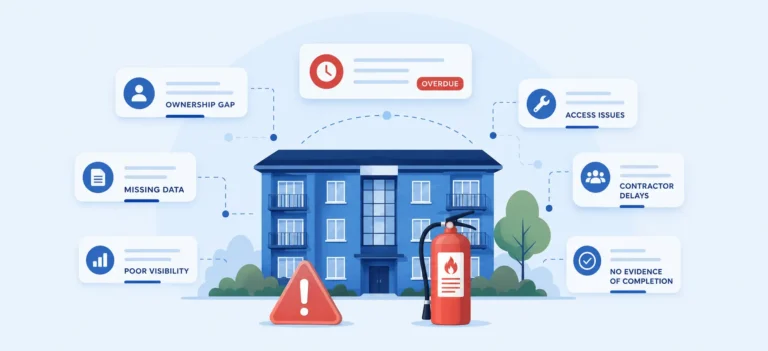
- Schedule access early so you’re not chasing keys a week before the deadline
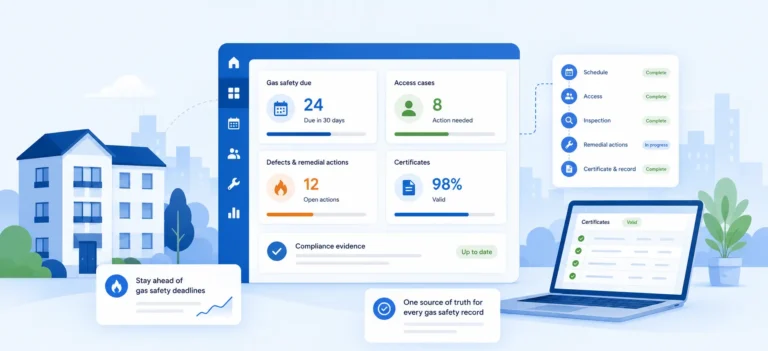
If you’re struggling with keeping your EICRs in date and actively monitored, software could be a potential solution. To learn more, check out True Compliance’s Electrical Safety Compliance page.