This guide focuses on England, where the rules for social landlords have recently been brought into line with the private rented sector.
Key takeaways
- In England, the Electrical Safety Standards regulations now cover social rented homes, with staged start dates: 1 December 2025 for new social tenancies, 1 May 2026 for tenancies that started before that, and a deadline of 1 November 2026 to complete the first round of checks for the older cohort.
- The core duty is a 5-year cycle for inspection and testing of the fixed electrical installation, to the standard in BS 7671 (18th Edition), evidenced by an EICR.
- In England’s social rented sector, landlords must also check the electrical equipment they provide under the tenancy at least every 5 years, with the level of testing set by the qualified person.
- Reports must be shared: tenants usually get the latest report within 28 days, and councils can request it (typically 7 days to supply).
- Communal areas and plant rooms still matter. If staff and contractors work there, duties under the Electricity at Work Regulations 1989 help shape inspection, maintenance and safe systems of work.
What the law now expects in England’s social rented homes
The government’s own summary is in the updated electrical safety standards guidance, which reflects the 2025 extension to social landlords.
At a practical level, it boils down to three obligations:
- Check the fixed installation on a set cycle (normally every 5 years).
- Fix anything that’s unsafe or requires investigation, within the timescales in the report and guidance.
- Prove it by retaining and sharing the right records at the right time.
The key dates you need on your programme
The timelines have been set and are coming into force over the next year. You can read more about the deadlines in the National Housing Federation summary, which explains the staged approach: new tenancies from 1 December 2025, existing tenancies come into scope 1 May 2026, and checks must be completed by 1 November 2026 for that existing cohort.
What has to be checked, and what “checked” means
1) Fixed electrical installation (the EICR)
This is the wiring, sockets, lighting circuits, consumer unit, and fixed equipment connected to the installation. The required standard is aligned to BS 7671 (18th Edition), and the evidence is the Electrical Installation Condition Report (EICR).
2) Landlord-provided electrical equipment
For social landlords, there’s a separate requirement for electrical equipment provided under the tenancy. The check must happen at least every 5 years, and the qualified person decides whether it needs a visual inspection, testing, or both to confirm it’s safe for continued use.
That’s not about resident-owned kettles and phone chargers. It’s about the items you supply as part of the let.
The deadlines that create the most exposure
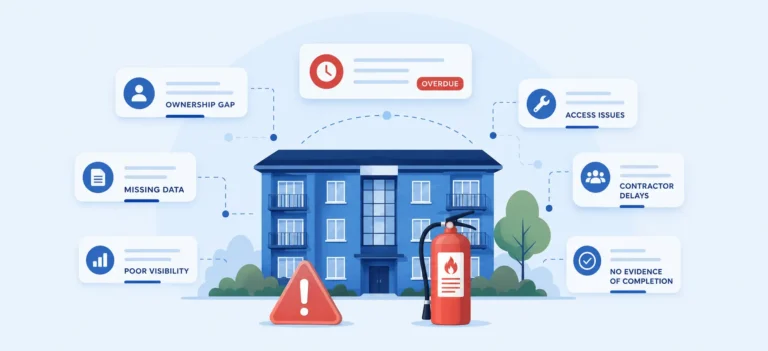
Most failures aren’t “we didn’t do a check”. They’re “we did the check, then lost control of the follow-up”.
The Regulations lay out the sharing and retention duties landlords must follow in England. In plain terms: provide copies to tenants within set windows, give a copy to the person doing the next inspection, and provide it to the local authority when requested (generally within 7 days).
The same framework also ties you to action timescales once defects are found. The guidance sets the expectation that remedial or investigative work is completed within 28 days, unless the report specifies a shorter period.
Best practice for housing providers
Legal compliance is the baseline. Best practice is what stops the same properties from becoming repeat offenders and keeps you ready for scrutiny.
Build a programme you can defend
- Start with an asset list that’s clean: address, tenure, tenancy start date (for the staged start), last EICR date, and next due date.
- Model the “catch-up” load and plan capacity early, especially if your stock has clustered expiry dates.
Treat access as a workstream, not an afterthought
- Book early, confirm consumer unit access, and set a standard process for no-access retries.
- Use resident comms that explain why entry matters and what happens on the day.
Don’t accept “unsatisfactory” without a plan
EICRs are coded for urgency. Your process should hardwire what happens next: raise the remedial order, confirm target dates, and file the completion evidence against the original report.
Include communal areas in your safety picture
The EICR duty is about the dwelling. Your blocks still have risers, lighting, door entry, plant, and staff-only areas. The HSE guidance on the regulations is a useful document to refer to for inspection, maintenance and safe systems of work in those spaces.
Keep an audit-ready evidence trail
The Chartered Institute of Housing notes that the Regulator of Social Housing has been expecting evidence of regular electrical testing, alongside wider changes in consumer regulation.
Evidence means:
- The latest report per home
- Proof of sharing (where required)
- Remedial completion records
- A clear next due date
- Exceptions you can justify (voids, decants, no access) with dates and actions
A quick note on Scotland
Scotland already expects a five-year cycle for social landlords, covering both the installation inspection and checks on landlord-provided appliances.
Related guide
If you’re looking to improve your electrical compliance rates, software might be the answer. Check out True Compliance’s Electrical Safety Compliance page to learn more.