In England and Wales, most day-to-day duties sit under the Fire Safety Order, and the legal “Responsible Person” is the one expected to make things happen. In workplaces, that’s often the employer. In blocks of flats, it’s usually whoever controls the common parts. The Home Office summarises how this works (and why more than one dutyholder is common) in its guide for persons with duties under fire safety legislation.
Key takeaways
- In England, the Home Office lists the main fire safety laws as the Fire Safety Order, the Fire Safety Act 2021, and the Fire Safety (England) Regulations 2022.
- A Responsible Person can be the employer, landlord, managing agent, or anyone with control over parts of the premises. You can have more than one Responsible Person, which makes cooperation non-negotiable.
- You must carry out and keep under review a fire risk assessment, and you must keep a written record of it.
- In England, the Fire Safety (England) Regulations 2022 add extra duties for multi-occupied residential buildings, including resident information and fire door checks.
- Scotland and Northern Ireland use different legislation and guidance, so “UK-wide compliance” needs a jurisdiction check, not a copy-and-paste approach.
Who is the “Responsible Person” and why employers are usually it
In England and Wales, if the premises is a workplace and it’s under the employer’s control (even partly), the employer will be the Responsible Person. In some buildings, the building owner (landlord) may also have duties, depending on the lease and who controls what.
The practical way to think about it:
- Employers are responsible for the safety of staff and others affected by their work activities in the premises they control.
- Owners, landlords, and managing agents are responsible for the parts they control, especially where they arrange maintenance or repair of safety measures like alarms, emergency lighting, and the fabric of the building.
If you share a building (multi-tenanted office blocks, mixed-use, commercial units under flats), you can end up with several dutyholders. The Home Office calls out the need for cooperation and coordination between Responsible Persons as a specific requirement.
The baseline duties (what “compliance” looks like on the ground)
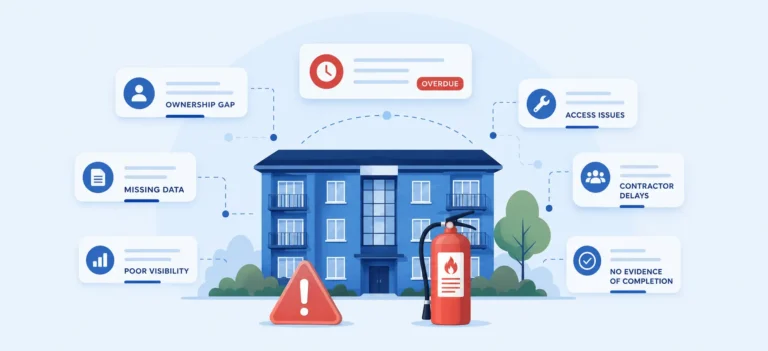
Most fire safety failures aren’t about a missing document. They’re about controls drifting over time.
Here’s the baseline, written the way an inspector tends to look at it:
Fire risk assessment, kept current
Generally, you should be abiding by the five-step method, and it’s still the best plain checklist: identify hazards, identify who’s at risk, reduce risk, record findings and plan, then review and update. It also states you must keep a written record of the assessment. There is a useful starting point on Gov.uk.
If you don’t have the competence or time, you are expected to appoint a competent person to help.
Keep escape routes usable and safe
This is the bread-and-butter work: routes and exits, doors, signage, lighting, and making sure nothing blocks the way out. Here is a list of things to consider, like emergency routes and exits, fire detection, firefighting equipment, evacuation planning, and the needs of vulnerable people. These should be considered as core considerations within an assessment.
Provide information, instruction and training
People can’t follow a plan they’ve never been told about. The Home Office guide includes sections on providing information and training, and it frames fire safety as a management job, not a one-off exercise.
In workplaces, the HSE fire safety overview emphasises a similar pattern: assess risk, put measures in place, and keep the assessment up to date.
Maintain fire safety measures
Maintenance is where “we’re compliant” lives or dies. Responsible Persons often rely on competent contractors to maintain systems, and those contractors can also hold duties related to the tasks they’re contracted to do.
Residential blocks: where Responsible Person duties catch owners and managing agents
For social housing and multi-occupied residential buildings in England, the Fire Safety Order applies to:
- workplaces (with very few exceptions)
- the common parts of blocks of flats and HMOs
- and, following changes, it also covers the structure, external walls (including windows, balconies and other attachments) and relevant doors in multi-dwelling premises.
If you manage blocks, your “Responsible Person” workload usually centres on:
- keeping common escape routes clear and protected
- maintaining fire doors in common parts
- managing actions from fire risk assessments, including compartmentation issues
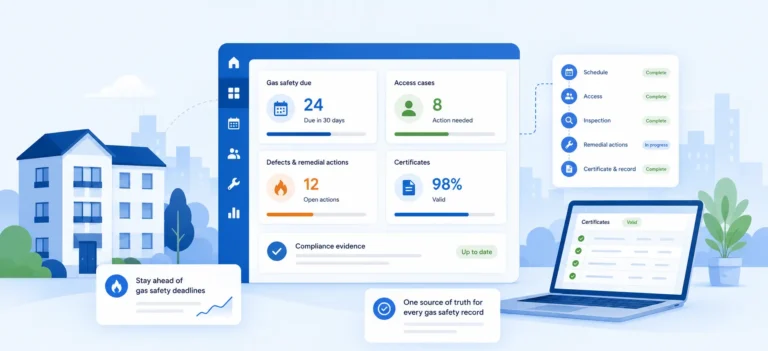
- tracking evidence across a portfolio, not just at the building level
England-only extras: Fire Safety (England) Regulations 2022
These Regulations add specific duties for multi-occupied residential buildings with two or more sets of domestic premises, and tighter requirements as building height increases.
This Home Office document explains the scope and the duty set, including resident information and fire door checks. For the door side, the separate fire doors guidance is the clearest practical reference.
Scotland and Northern Ireland: same goal, different rulebook
If you operate across the UK, this is where teams get caught out.
- Scotland: the Scottish Government publishes fire safety risk assessment forms and guidance for non-domestic premises and HMOs.
- Northern Ireland: the Northern Ireland Fire & Rescue Service explains the duty to complete a fire risk assessment on its Fire risk assessments page, and the legislative base includes the Fire Safety Regulations (Northern Ireland) 2010.
The “show me” pack: what to have ready
If you’re responsible for a building, this is the evidence set that saves you time and pain:
- latest fire risk assessment, with review date and clear scope
- action plan with owners, deadlines, and close-out proof
- maintenance records for alarms, emergency lighting, extinguishers, smoke control (where fitted)
- training records and drill logs (workplaces)
- resident information records and fire door check logs (England, where applicable)
If you’re a housing provider and you’re struggling to maintain fire compliance, it might be time to look at software. True Compliance’s page on Fire Safety Compliance is a good place to start.