If you’re responsible for LOLER compliance in social housing, you should be able to show what you own, what’s in scope, when it was examined, what defects were raised, and what you did about them, without hunting. Records must be kept, and defects that present danger must be reported and managed.
Key takeaways
- If you have lifts that are used by people, they fall under LOLER and PUWER expectations for thorough examination, maintenance and inspection.
- Even where LOLER may not apply, insurers may still expect similar risk management for public liability.
- Thorough examinations have set intervals, unless an examination scheme specifies otherwise: typically 6 months for lifting people and accessories, and 12 months for other lifting equipment.
- Thorough examination reports must contain specific information (Schedule 1), and records should be protected from unauthorised alteration.
- Lifting operations must be planned by a competent person, supervised, and carried out safely (this is particularly important for hoists, goods lifts, and non-routine lifts).
First, what usually counts as “in scope” in housing stock
Most providers will have a mix of:
- passenger lifts in blocks and schemes
- platform lifts (often in supported housing and communal areas)
- stairlifts (sometimes in staff-controlled settings)
- hoists and lifting accessories in care environments
HSE’s Passenger lifts and escalators guidance is the best reference point for housing teams to start with, because it explains the work-use boundary and the “still responsible” position where employers control equipment used by the public.
The evidence insurers and auditors expect you to have ready
Think of this as your “show me” pack for LOLER compliance that social housing teams get asked for most.
A lift and lifting equipment register you can defend
Minimum fields that stop you from losing days later:
- unique asset ID
- exact location (block, core, landing, postcode)
- asset type and whether it lifts people
- who controls it day to day (in-house, managing agent, lift contractor)
- last thorough examination date and next due date
This is the backbone for everything else, including insurance reporting and compliance dashboards.
A written scope position for each asset type
In social housing, the work-use test often trips people up. If contractors and staff use a lift as part of their work, it is subject to LOLER and PUWER requirements. Where it’s not used by people at work, it might still be covered under Section 3 duties, and insurers may demand similar risk management. Keep that logic written down per asset class and apply it consistently across the estate.
A schedule that matches the statutory intervals (or your examination scheme)
Thorough examinations should be carried out, including after exceptional circumstances such as damage, failure, or long periods out of use. The HSE guidance states the usual intervals unless an examination scheme specifies otherwise.
If your portfolio includes varied lift types, heavy usage, or high-risk environments, an examination scheme can be the right call. Either way, you need one calendar that survives contract changes.
Thorough examination reports with the required contents
The contents required in a thorough examination report are specified by Schedule 1 of LOLER, with 11 items that must be included. That matters when you’re challenged on whether a report is actually a compliant, thorough examination report or just a service sheet.
Keep reports against the asset record, not “by contractor” folders.
Defect handling that is fast, evidenced, and closed out
This is where claims and enforcement get expensive.
Where a defect is identified that is (or could become) a danger, the user should be notified immediately, equipment should not be used until the defect is remedied, and the enforcing authority must be notified with a copy of the report.
Evidence you should be keeping:
- The defect notice
- Decision to remove from service (if required)
- Remedial work order and completion proof
- Sign-off and date returned to use
- Any notification trail, where required
Maintenance and interim inspections, separate from a thorough examination
There is a difference between maintenance (PUWER) and thorough examination (LOLER). Some lifting equipment may need inspection between thorough examinations, based on risk and manufacturer guidance.
In housing, insurers often ask for:
- evidence of routine maintenance
- evidence of statutory thorough examinations
- evidence that findings from either stream are acted on
Proof of competence and independence
You don’t need a full CV library of your contractors, but you do need enough to show the competent person is competent for the asset type, and that your arrangements don’t amount to people checking their own work. The role of the competent person is central to what is covered and how decisions are made.
Planning records for non-routine lifting operations
This isn’t about day-to-day passenger lift travel. It’s about lifting operations involving lifting equipment that need planning.
LOLER requires lifting operations to be properly planned by a competent person, appropriately supervised, and carried out safely. That can cause issues in care settings (hoists), refurbishment work, or any unusual lifting activity. Keep method statements, lift plans, and supervision records where relevant.
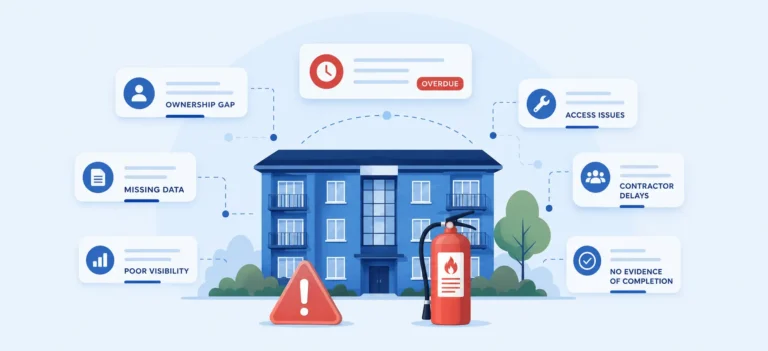
Common evidence gaps in social housing
- Reports exist, but the asset ID or address doesn’t match your register.
- You have the report, but not the defect close-out trail.
- A lift moved from “residential only” to “work use” after staffing changes, and the regime never updated.
- Managing agent handovers: dates and reports lost between contracts.
- Records sit in contractor portals with no guarantee of retention or audit access.
How to tie LOLER evidence into insurance compliance work
Insurers don’t just want “we comply with LOLER”. They want proof that inspection regimes are controlled across the stock, with actions tracked to closure.
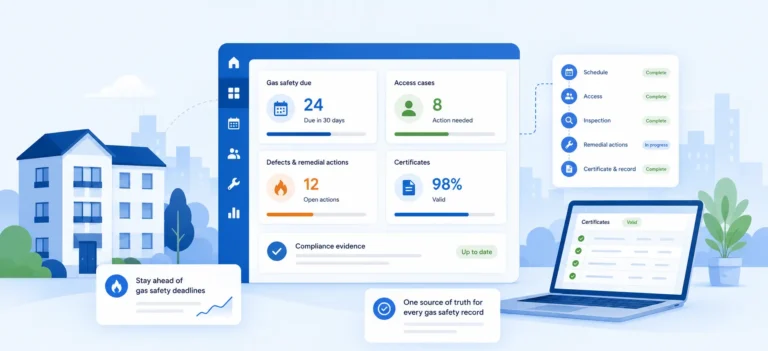
If you’re building a broader approach that covers lifts alongside other insurance-driven inspections, keep LOLER in the same workflow: one schedule, one evidence trail, one place to see what’s overdue and what’s closed.
A quick self-check for LOLER compliance in social housing
If someone asked today, could you provide them with these within the hour:
- An asset register for all lifting equipment in scope
- The latest thorough examination report for each
- The next due date for each
- A list of open defects and proof of close-out for the last 12 months
- Evidence that dangerous defects were escalated and equipment stood down where required (HSE)
If any of that is shaky, that’s the work to do next.
If you’re struggling to maintain your insurance compliance, then it might be worth looking at how software can help you. You can check out True Compliance’s insurance inspections page to learn more.