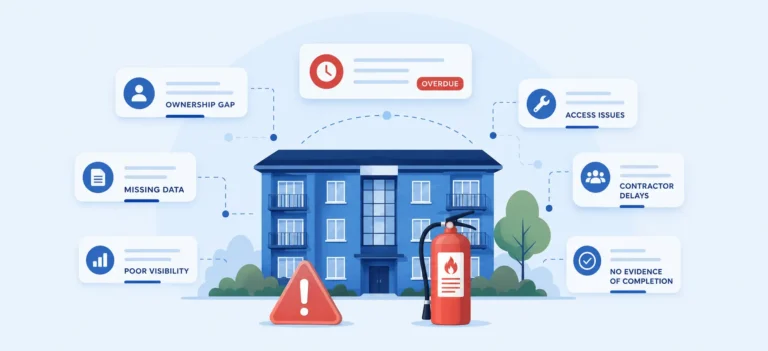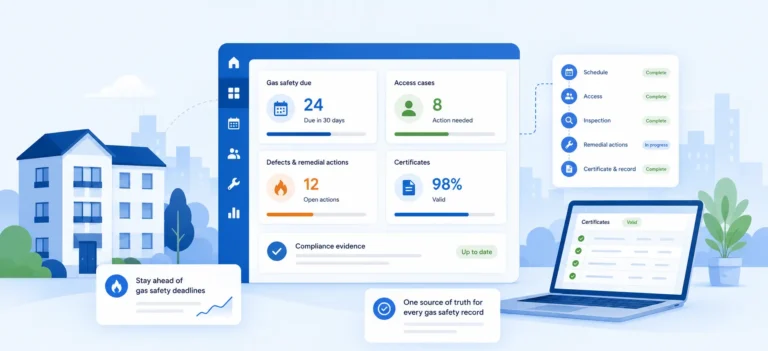
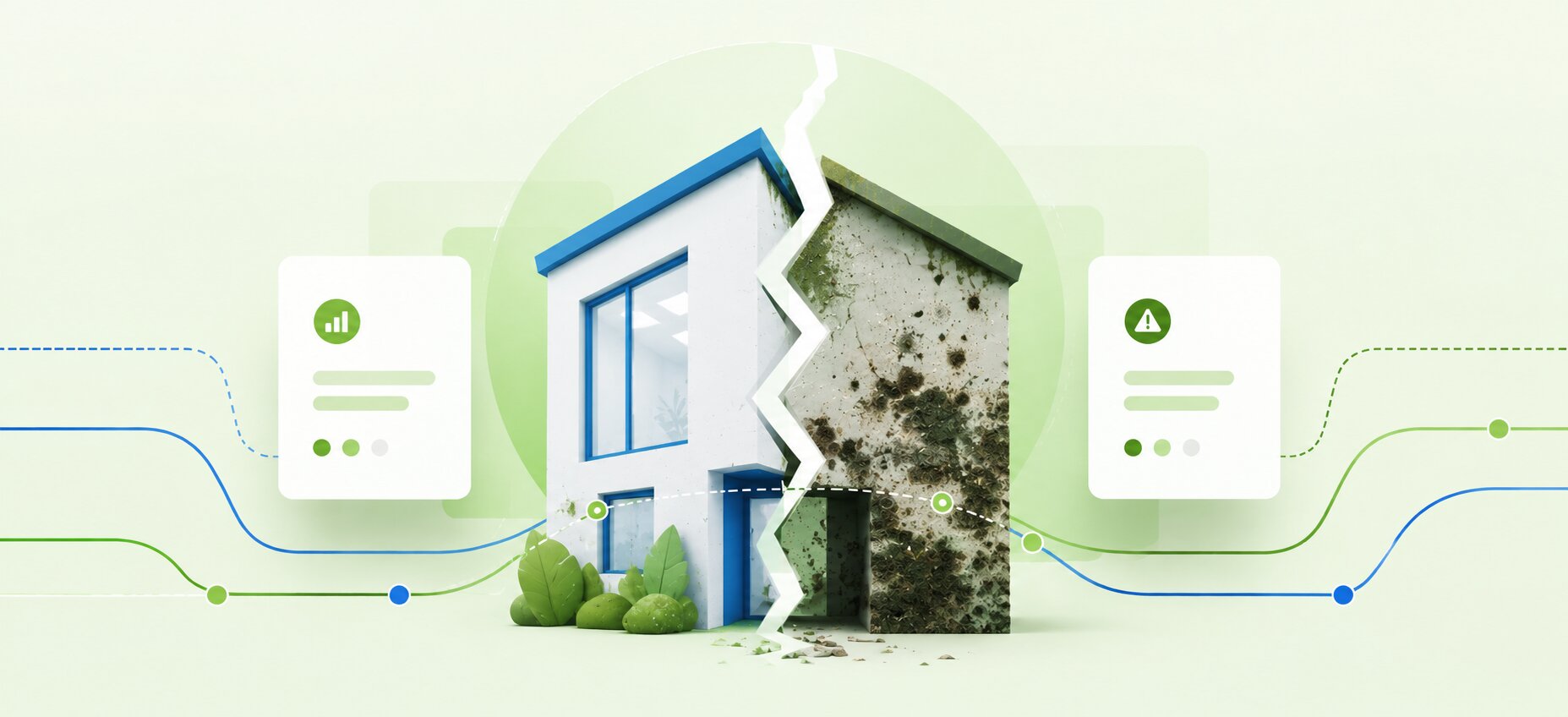
Damp and mould does not behave like that.
It does not sit neatly inside a standard compliance calendar. It arrives unannounced, triggered by anything from complaints, inspections, weather shifts, building defects, or even organisational delay. It creates an evidential trail that regulators now expect landlords to document clearly and defend confidently. And it cuts across teams that rarely had to operate in lockstep before.
In short, damp and mould is not just another compliance workstream. It exposes the weaknesses in traditional compliance operating models.
Key takeaways
- Damp and mould is triggered, requiring evidence and cross-team collaboration, and not cyclical.
- It demands root cause diagnosis and resident engagement, not surface-level repairs.
- The regulatory direction is clear: response times are tightening, and evidence standards are rising.
- Reliance on contractors as the primary control is increasingly fragile.
- Compliance ownership is shifting from being a “repairs department problem” to an organisation-wide accountability model.
A Different Type of Compliance Problem
Most compliance streams are structured around asset certainty. You know what you own. You know when it was last inspected. You know when it’s due again.
Damp and mould is not asset-certainty driven. It’s event-driven.
A resident reports black mould in a bedroom. A surveyor flags high moisture readings. A complaint escalates. A coroner’s report lands in the press. Each of these moments triggers regulatory scrutiny and has enormous potential for reputational damage.
Following the inquest into Awaab Ishak’s death, the sector saw the regulatory environment centralise in what is now widely referred to as Awaab’s Law. Time-bound expectations and clear obligations to investigate and remedy hazards have fundamentally altered a housing provider’s risk landscape.
Traditional compliance models are not designed for this kind of unpredictability. They are built for throughput, not rapid diagnosis. For certificates, not causation.
Not Cyclical. Triggered.
Gas safety happens every 12 months. Fire risk assessments are reviewed on a defined schedule. Electrical checks follow a repeat cycle.
Damp and mould does not wait for a slot in the planner.
It escalates when:
- Ventilation fails.
- A repair is delayed.
- A building design flaw interacts with seasonal conditions.
- Communication breaks down.
That means maintaining compliance is no longer about hitting specific dates. It’s about how quickly and competently your organisation reacts to a trigger.
The risk is not “overdue inspection.” The risk is “inadequate response.”
This requires a different operating rhythm. You need rapid triage, clear accountability and defined decision pathways. You need escalation protocols that are understood across functions – hitting housing, repairs, asset management and compliance teams all at the same time.
Without that kind of coordination, cases drift. And drift is where your exposure grows.
Education and Root Cause – Not Just Remedial Work
For years, damp and mould was treated as a repair category. Wash down, repaint, install a fan and close the job.
The Ombudsman has now made it clear that this approach is insufficient. There is now a need to move away from blame and towards understanding building performance, ventilation, heating patterns and resident circumstances.
That is not a one-visit fix.
It demands:
- Skilled diagnosis.
- Clear recording of findings.
- Resident education delivered respectfully and evidenced.
- Follow-up inspections to confirm effectiveness.
In compliance terms, this is significant. Regulators increasingly expect evidence of remedy, not just evidence of attendance. Did you identify the root cause? What steps were taken? Were they proportionate? Was the resident supported? Was the issue rechecked?
A closed repair order can no longer be considered proof of resolution.
Shared Responsibility Under Pressure
Another strain that this is putting on traditional compliance models is ownership.
Historically, damp and mould sat in responsive repairs. Compliance teams might have visibility, but not operational control. Asset teams might be consulted on structural defects. Housing officers might be pulled in once complaints escalate.
That fragmented model is now having to adjust to the new regulatory environment.
With tighter response expectations and rising scrutiny from the Regulator of Social Housing, damp and mould is becoming a board-level compliance concern. It touches consumer standards, health and safety duties, complaints handling, and data governance.
We’re seeing the shift, and it’s subtle but important: we’re moving from a “repairs issue” to a shared compliance responsibility.
That creates tension in organisations that were structured around clear functional boundaries. Who owns the risk? Who signs off on the root cause? Who decides whether residents need to be evacuated? Who checks that follow-up inspections happened? All of this is happening while teams face manpower constraints, rising demand, and increasing case complexity.
Traditional compliance models assume stability. Damp and mould introduces volatility.
Contractors as a Weak Control
Many landlords rely heavily on contractors for diagnosis and remediation. In cyclical compliance, this can work well. The specification is clear, the output is measurable, and the certificate confirms delivery.
Damp and mould is much more nuanced.
The diagnosis quality varies enormously, with root cause analysis requiring good judgment. Resident communication matters because follow-up checks must be scheduled and evidenced. If the contractor’s job ends at “work completed,” the compliance risk remains with the landlord.
Regulators will not accept “the contractor didn’t tell us” as a defence.
That’s where over-reliance on contractors creates gaps:
- Inconsistent evidential records.
- Variable technical assessments.
- Limited organisational learning.
- Weak feedback loops into asset strategy.
Where damp and mould is treated as outsourced activity rather than controlled risk, housing providers are opening themselves up for hefty judgements and unhappy residents.
Evidence Is the New Currency
Perhaps the most significant shift is evidential. In cyclical compliance, the documentation is obvious – whether it’s a certificate, report, or the latest result. In damp and mould, the documentation is layered. You’ve got the initial report, inspection findings, moisture readings, surveys and agreed action plans. Then you’ve got notifications of completed works, evidence of resident communication, follow-up confirmations and ongoing monitoring requirements.
Without robust record-keeping and clear case management, organisations struggle to demonstrate control. And once scrutiny arrives from the Ombudsman, regulator or the media, reconstruction is painful and incomplete.
Traditional compliance dashboards rarely capture this complexity. They show volumes and timescales. They do not show causation, learning or recurrence.
The Operating Model Has to Change
Damp and mould forces uncomfortable questions.
- Are cases triaged by risk severity?
- Is there a defined diagnostic standard?
- Do teams understand escalation thresholds?
- Is follow-up mandatory and tracked?
- Can the organisation evidence learning from recurring patterns?
- Is contractor performance measured on outcomes, not attendance?
Where the answer is unclear, housing providers are exposed to risk. Damp and mould is not just another column in your compliance tracker. It’s a stress test for how well an organisation understands its stock, its residents and its own internal accountability.
And unlike cyclical programmes, it does not wait patiently for improvement plans. It arrives when it wants to – and it demands a response that is fast, joined-up and defensible.