
Below is what “UK water regulations” means in practice for social landlords, and how it changes compliance work on the ground.
Key takeaways
- “Water regulations” split into two realities: what suppliers must provide and what landlords must manage inside buildings.
- For social landlords in England, regulation is pushing harder on property-level records, evidence, and follow-through on health and safety.
- Most compliance risk sits in the building: legionella control, stagnation, temperatures, outlet hygiene, and contractor governance, not the incoming mains.
- The direction of travel is clear: fixed timeframes, written summaries, and stronger record-keeping expectations when hazards are identified.
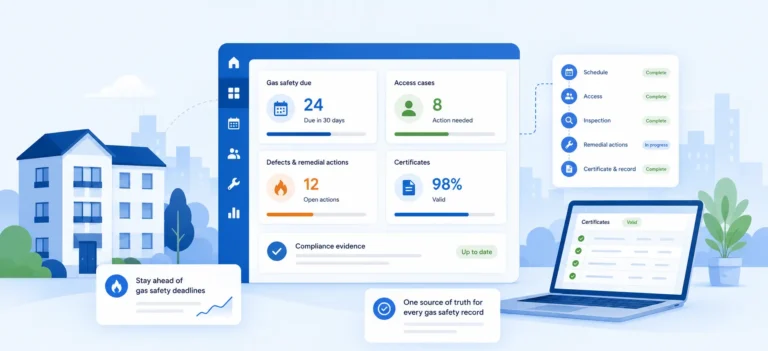
- If you’re managing this across a portfolio, you need one joined-up view of assets, checks, actions and proof.
The biggest shift: regulation cares about proof, not intention
In England, the Regulator of Social Housing’s Safety and Quality Standard raised the bar on evidence. It requires an accurate, up-to-date, evidence-based understanding of stock condition, and it expects registered providers to take all reasonable steps to protect tenants’ health and safety in homes and communal areas.
That pushes water compliance out of “annual assessments” and into day-to-day control: condition data, site intelligence, and actions closed to a standard.
Water quality rules don’t stop at the front door, but responsibility changes
A lot of “water quality regulations” sit with suppliers. For England, the Water Supply (Water Quality) Regulations 2016are primarily concerned with the quality of water supplied by water undertakers and licensed suppliers.
But social housing compliance lives in the bit you control: storage, distribution, fittings, and maintenance inside the building. That’s where contamination routes appear and where legionella risk grows when control slips.
Two frameworks tend to shape landlord practice here:
- The Water Supply (Water Fittings) Regulations 1999, which are about preventing contamination and waste, including backflow prevention.
- HSE guidance on controlling legionella risk in hot and cold water systems is built around risk assessment and control measures.
Impact on compliance: You can’t treat “water quality” as a supplier issue if you have a communal plant, storage tanks, boosted systems, long pipe runs, or outlets that don’t get used.
Legionella control drives most of the workload (and most of the audit questions)
For landlord-controlled hot and cold water systems, control and monitoring are what matter. Health and safety law does not require a “legionella test certificate”, and testing should not be confused with temperature monitoring.
Temperature targets remain the backbone for many buildings:
- Hot water stored at 60°C or above
- Hot water reaching 50°C within 1 minute at outlets (55°C in healthcare premises)
- Cold water kept, where possible, below 20°C
Impact on compliance: teams need routines that prove control (temperatures, flushing where needed, cleaning schedules), plus a clean escalation path when readings drift.
Timeframes and tenant-facing communication are tightening
Policy in England is moving towards set deadlines and clearer tenant communication when hazards are found. Government guidance on Awaab’s Law timeframes for repairs sets fixed timeframes for emergency hazards and significant damp and mould hazards, and it places weight on accurate records, written summaries of findings, and clear communications. It also sets out the planned expansion of the regulations to include additional hazards in 2026 and then wider hazards in 2027.
Even where a water safety issue isn’t explicitly named in that first phase, the operational lesson lands the same way: speed, documentation, and consistency are becoming non-negotiable.
Impact on compliance: your water programme has to connect to repairs triage, resident contact, access management, and record-keeping. It can’t sit in a separate contractor folder.
Fittings and backflow: small hardware, big consequences
Backflow prevention rarely makes the headlines, but it’s exactly the sort of control that gets missed during void works and refurbishment programmes. The Water Fittings Regulations backflow requirements exist to stop contamination routes back into the supply.
Impact on compliance: specifications, permits-to-work, and sign-off checks have to catch “minor” plumbing changes before they become a risk you inherit.
What this means for social landlords day to day
If you strip away the labels, the impact comes down to six practical shifts:
- Better stock data: you need a property-level view of condition and system risk.
- Clear responsibility: who owns water risks, who does the checks, who signs off on remedials.
- Controls you can evidence: temperatures, flushing, cleaning, and inspections.
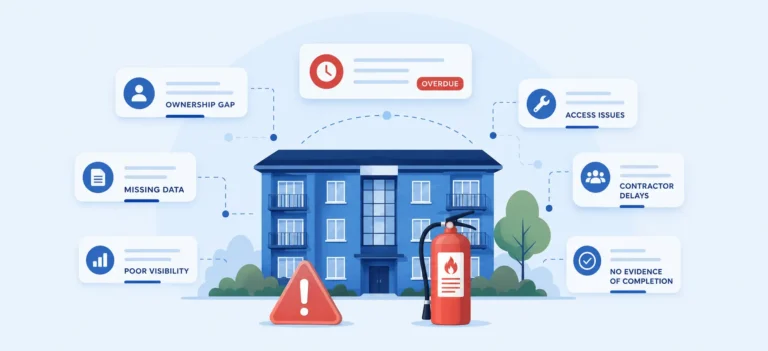
- Remedials closed properly: not “raised with contractor”, but fixed and verified.
- Joined-up records: results and actions in one place, not scattered.
- Audit readiness: because the expectation is moving from “have you got a document?” to “show us you’re in control.”
A simple way to keep the programme under control
If you want a workable baseline across stock, keep it tight:
- Map system boundaries (supplier vs landlord-controlled assets).
- Standardise control routines by system type (communal vs domestic).
- Make exceptions visible (out-of-range temperatures, missed visits, access failures).
- Track every action to closure with proof.
If you’re looking to further anchor your water compliance in fact and evidence, you might consider checking out True Compliance’s water quality compliance page.