
For social housing providers, insurance compliance for high-risk building work comes down to one thing: evidence. Not just that inspections happened, but that you can show control across the whole building, year after year.
Key takeaways
- In England, a “higher-risk building” (in occupation) is broadly a building with at least two residential units that is 18 metres or higher or 7 storeys or more.
- High-rise residential buildings must be registered with the Building Safety Regulator by the principal accountable person, and the service also supports reporting when a safety case report is prepared or updated.
- The Fire Safety (England) Regulations 2022 add specific duties for multi-occupied residential buildings, with extra requirements for high-rise, including items like secure information boxes and building plan sharing.
- For many property placements and renewals, you’re also operating under the UK’s duty of fair presentation, meaning risk information needs to be disclosed in a way that’s “reasonably clear and accessible”.
- Property risk surveys typically collect underwriting information by inspecting sites and reviewing protections and management controls, then produce a report for underwriters and agreed recommendations.
What counts as “high-risk” and why insurers care
“High-rise” gets used loosely. In building safety law, the higher-risk regime is more precise. The in-occupation definitionin England is tied to height or storeys, plus at least two residential units.
That matters for insurance because it usually correlates with:
- more complex fire safety arrangements
- more reliance on active systems (alarms, smoke control, firefighting lifts)
- greater scrutiny on building information, plans, and controls
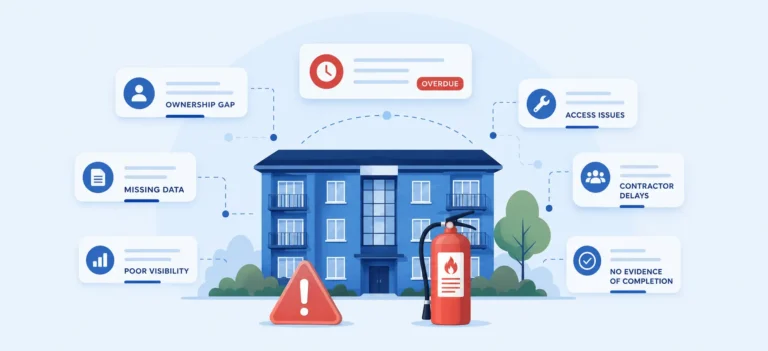
In other words, if you cannot evidence control, the risk looks unmanaged, even if the day-to-day reality is better than the paperwork suggests.
How insurers assess compliance risk on high-rise stock
Most insurer assessment has two lanes.
Lane 1: renewal and disclosure. Commercial insurance in the UK is shaped by the duty of fair presentation. You’re expected to disclose material circumstances clearly, not bury them in attachments.
Lane 2: surveys and risk engineering. For bigger portfolios, surveys are common. The general outline is: site inspection, interviews, review of protections, then a report for underwriters with recommendations that your organisation agrees to implement.
So the “insurance compliance” test becomes: can you hand over a clean, building-level evidence pack without assembling it from six places?
The evidence pack insurers expect you to be able to produce
Policy wording and survey actions vary, so treat this as a practical baseline for social housing high-rise.
1) Building profile and responsibility map
Start with a one-page summary per building:
- Height/storeys and HRB status (where relevant)
- Who the accountable person and the principal accountable person are
- Who is the responsible person under fire safety duties (where applicable)
- Managing agent and key contractors (lifts, fire, M&E)
Government guidance sets out the role of accountable persons and the principal accountable person for high-rise residential buildings.
2) Proof of Building Safety Regulator registration and safety case readiness
For HRBs, you need to be able to show:
- The building is registered
- You can evidence the building’s structure and fire safety information submitted through the service
- Your safety case report process is live, maintained, and reviewable
This guidance sets out the registration service and what the principal accountable person can do within it, including notifying the regulator when a safety case report is prepared or updated.
For the content of the safety case report, use the government’s own checklist.
3) The “golden thread” done properly
This is where high-rise compliance often falls apart: information exists, but it’s out of date, inconsistent, or not findable.
The golden thread guidance describes the information that dutyholders and accountable persons need to keep.
From an insurance angle, golden thread discipline pays off fast. When a surveyor asks for drawings, fire strategy information, system commissioning, and change history, you’re not scrambling.
4) Fire Safety (England) Regulations evidence
These regulations added specific, checkable duties. For high-rise residential buildings, that includes items like secure information boxes.
It also includes sharing up-to-date plans with fire and rescue services. London Fire Brigade summarises what responsible persons must provide under the regulations and how plans should be supplied.
And for door checks and other duties, NFCC’s FAQs provide a plain-language overview of the checks expected under the regulations.
5) A closed-loop defect and remedial trail
This is what underwriters and surveyors use to judge whether controls actually work.
You want to be able to show:
- inspection dates and results
- defects raised, with severity and interim measures
- remedial work orders and completion evidence
- sign-off and re-inspection, where required
- a clear audit trail of decisions
Here is a reminder of why this matters: underwriting reports often include recommendations and agreed actions, and those become renewal questions later.
How to make renewal easier on high-rise portfolios
If you want fewer “urgent” insurer chases two weeks before renewal, build a standard pack per building and keep it updated monthly. That supports a fair presentation, because what you disclose is clear, current, and easy for an insurer to follow.
Bottom line: high-rise insurance compliance is less about having “documents” and more about being able to prove, on demand, that risk is understood, controlled, and tracked to closure.
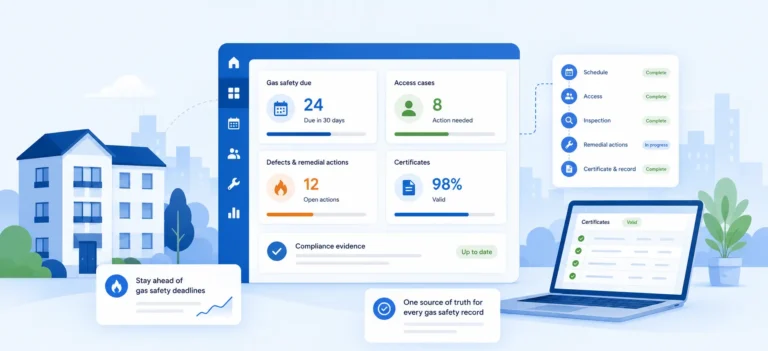
If you’re looking to pull these inspection regimes into one operational view, you might consider how software can help. If you’re interested, check out True Compliance’s Insurance Inspections page.