
Insurance inspections sound straightforward: identify the asset, arrange the visit and retain the report. Across a social housing portfolio, the reality is less tidy.
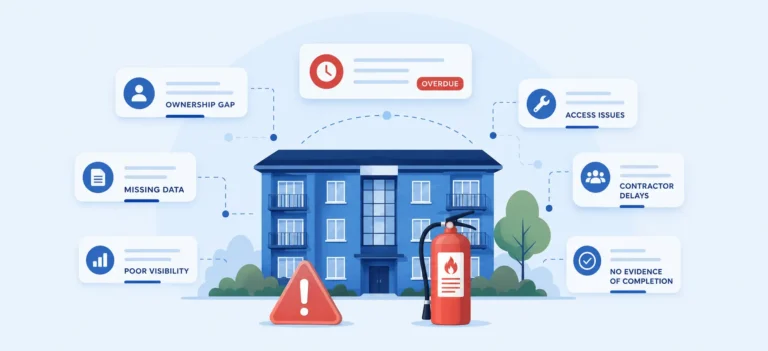
A missed inspection will often begin months before the deadline, when an asset is omitted from a register, the wrong frequency is recorded or responsibility becomes blurred between the housing provider, broker, insurer and inspection contractor. By the time the overdue position appears on a dashboard, the underlying control may already have failed.
The term “insurance inspection” can also cover different requirements. Some inspections arise from policy wording, insurer surveys or risk-improvement actions, while others are statutory examinations commonly delivered by engineering inspection providers. Insurance compliance and statutory compliance can overlap, but they are not the same. The source of the requirement determines the frequency, responsible party and evidence you need to retain.
Key takeaways
- Most missed inspections are caused by ordinary gaps in data, ownership, scheduling and follow-through.
- An inspection programme is only as reliable as the asset register beneath it.
- Servicing and planned preventative maintenance do not automatically satisfy a separate inspection or thorough examination requirement.
- Contractor appointment does not remove the housing provider’s need to monitor delivery and exceptions.
- A completed visit is not under control until the report has been received, checked and connected to any required actions.
- Effective escalation must begin before the due date, not after an inspection becomes overdue.
The asset register is incomplete or out of date
You cannot schedule an inspection for an asset that the compliance team does not know exists.
Assets are frequently missed following property acquisitions, development handovers, equipment replacements or changes in managing-agent responsibility. Other records remain active after equipment has been removed, creating duplicate or misleading inspection schedules.
For registered providers in England, the Regulator of Social Housing’s Safety and Quality Standard requires an accurate, up-to-date and evidenced understanding of homes, including property-level records based on physical assessment. The regulator has repeatedly linked weak risk control to incomplete or outdated information about assets and homes.
A workable control should reconcile:
- the property and asset register
- insurer and broker schedules
- planned preventative maintenance records
- development and acquisition handovers
- contractor asset lists
- records of assets that have been replaced or decommissioned
Each asset should have a stable identifier, location, inspection type, responsible person and documented reason for its inspection frequency.
The wrong inspection frequency has been recorded
There is no single annual rule for every insurance inspection. Frequency may be determined by legislation, an examination scheme, manufacturer information, policy wording, an insurer’s risk survey or the competent person’s findings.
For example, in Great Britain, regulation 9 of the Lifting Operations and Lifting Equipment Regulations 1998 requires relevant lifting equipment to undergo thorough examination. Unless a competent person has established a different examination scheme, the Health and Safety Executive explains that the usual intervals are six months for equipment used to lift people and 12 months for other lifting equipment.
The Pressure Systems Safety Regulations 2000 take a different approach. Relevant pressure systems must be examined within the intervals specified by their written scheme of examination.
Recording only a due date is therefore not enough. The live record should also show:
- the source of the requirement
- the applicable jurisdiction
- the inspection or examination interval
- any event that could trigger an earlier examination
- who approved a change to the schedule
This is general information, not legal advice. Providers should check the applicable legislation, policy terms and competent-person recommendations for each asset.
Servicing is mistaken for inspection
Planned preventative maintenance, servicing and thorough examination are related activities, but they do different jobs.
A maintenance contractor may lubricate components, replace worn parts and confirm that equipment is operating. A competent person carrying out a thorough examination considers whether deterioration or defects could affect safety and produces a formal report. Completing one does not necessarily complete the other.
This distinction is particularly important where the same contractor group delivers several services or where internal systems use broad labels such as “lift visit” or “plant check”. A closed maintenance job can create false assurance when the separate inspection remains outstanding.
Housing providers should align servicing and inspection calendars where this improves access and efficiency, while retaining separate work orders, completion criteria and evidence for each requirement.
Access and site readiness have not been planned
The inspector may arrive on time and still be unable to complete the work.
Common barriers include missing plant-room keys, incorrect access information, locked compounds, unavailable escorts, equipment that has not been isolated and residents who were not informed about access requirements. Specialist examinations may also require shutdowns, test weights, safe working space or support from the maintenance contractor.
The control should begin before the appointment. A useful pre-visit process confirms:
- the exact asset and location
- access arrangements and named contacts
- permits, isolations or shutdown requirements
- resident communication where needed
- known defects or operational restrictions
- any equipment the inspector expects to be available
Failed access should create a recorded exception with a new appointment, owner and escalation date. It should not disappear into a contractor’s visit notes.
Contractor capacity and accountability are unclear
Inspection programmes are vulnerable to annual renewal peaks, engineer shortages, subcontractor changes, sickness and uneven geographical coverage. A contract may look adequately resourced at mobilisation but struggle when several hundred inspections fall due in the same month.
Responsibility also becomes blurred when the broker appoints the inspection provider, the repairs team controls access and the compliance team receives the reports. Everyone owns part of the process, but nobody owns the end-to-end result.
The Health and Safety Executive’s guidance on using contractors emphasises contractor selection, risk assessment, communication, supervision and clarity about where responsibility sits. Appointment is not a substitute for active contract management.
Providers should monitor future workload as well as completed visits. Useful measures include appointments booked, inspections at risk within 30, 60 and 90 days, failed visits, report turnaround and capacity by region or asset type.
Reports are delayed, rejected or stored in the wrong place
An inspection may have happened without the organisation being able to prove it.
Reports commonly remain in shared inboxes, contractor portals, local drives or individual folders. Others arrive with the wrong address, an unmatched asset reference or missing information, meaning they cannot be accepted into the compliance record.
This creates two versions of performance: what the contractor believes it completed and what the housing provider can evidence. The difference matters during insurance renewal, internal assurance and regulatory scrutiny.
The Regulator of Social Housing has identified up-to-date and comprehensive data as fundamental to effective risk management and has described poor data as a recurring feature in cases where landlords failed to meet required outcomes.
Set a clear report-receipt standard and track inspections through distinct stages:
- Appointment completed.
- Report received.
- Asset and property matched.
- Report quality checked.
- Outcome recorded.
- Actions assigned.
- Evidence retained.
Only then should the inspection be treated as complete.
Reminders and escalation start too late
A reminder sent on the due date is an overdue notification, not a preventive control.
Inspection lead times may need to account for resident contact, specialist engineer availability, shutdown planning, report production and repeat attendance. A single generic reminder will not reflect these differences.
A stronger process uses staged escalation based on risk and remaining time. The asset owner might receive the first alert, followed by the contract manager, compliance lead and senior responsible person as the deadline approaches. High-risk or statutory examinations should have shorter escalation routes and clear rules for taking equipment out of use where required.
The part that often gets missed is closure. An inspection report may identify a defect, shortened examination interval or need for further testing. Unless those outcomes update the live asset record, the next deadline may still be wrong.
How to reduce missed insurance inspections
The practical test is whether you can answer the following questions for every in-scope asset:
- Do we know where it is and who controls it?
- Can we show why this inspection is required?
- Is the frequency based on the correct policy, legislation or examination scheme?
- Has the appointment been booked early enough to recover from failure?
- Can we see whether the report has been received and accepted?
- Are defects, revised dates and follow-up actions tracked to verified closure?
- Can we produce the complete evidence trail without relying on one person’s inbox?
Missed inspections are rarely fixed by adding another spreadsheet or sending more reminders. They are prevented by a boring, repeatable process that connects assets, requirements, appointments, reports, actions and escalation.
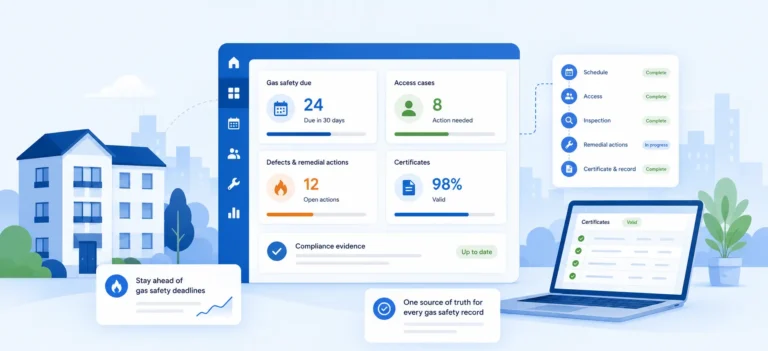
If you are reviewing how this evidence is controlled across your portfolio, the True Compliance insurance inspections platform brings inspection schedules, reports and remedial actions into one property-level record.